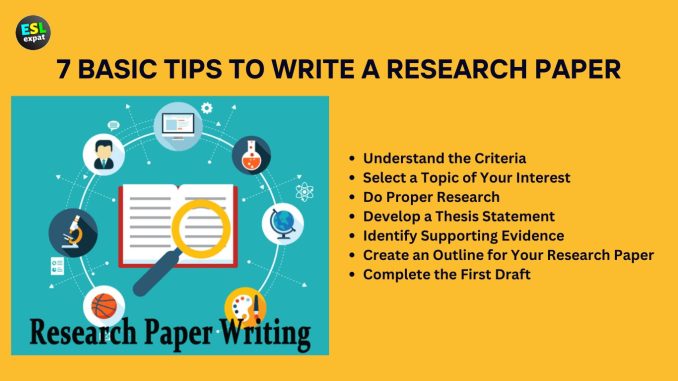
Writing a research paper can often feel like embarking on a long and complex journey, fraught with potential detours and dead ends. Yet, for anyone engaged in academic pursuits, professional analysis, or even just a deep dive into a topic of personal interest, mastering the art of research paper writing is an invaluable skill. It’s a methodical process that demands critical thinking, rigorous investigation, and clear, coherent communication. Approaching this task with a strategic mindset, rather than seeing it as an insurmountable hurdle, can transform the experience from daunting to genuinely rewarding, leading to a polished, authoritative, and impactful piece of work.
### Choosing and Refining Your Topic
The foundation of any great research paper lies in a well-chosen and thoroughly refined **topic**. This initial step is far more crucial than it often appears, as a poorly defined topic can lead to endless sifting through irrelevant information or an inability to form a cohesive argument. Begin by selecting a subject that genuinely sparks your curiosity; genuine interest will fuel your motivation through the arduous research and writing phases. Once a broad area is identified, narrow it down to a specific, manageable question or problem that can be adequately addressed within the paper’s scope. For instance, instead of “The impact of social media,” a more focused topic might be “The effect of Instagram on the self-esteem of adolescent girls in urban environments.” This specificity allows for targeted research and a more profound analysis.
Before committing fully, conduct preliminary research to ensure there’s sufficient credible information available to support your inquiry. This initial exploration helps validate the feasibility of your topic and can also refine your research question, making it more nuanced and impactful. A strong topic isn’t just interesting; it’s researchable and offers scope for original analysis or a fresh perspective on existing knowledge.
—
### Conducting Thorough and Organized Research
With a refined topic in hand, the next critical phase involves **conducting thorough and organized research**. This is where you gather the evidence that will support your arguments. Rely on diverse and credible sources, including academic journals, reputable books, scholarly articles, government reports, and established think tanks. Avoid over-reliance on popular websites or opinion pieces, as these often lack the necessary academic rigor. Learn to critically evaluate sources for bias, accuracy, and relevance to your specific topic. Effective researchers don’t just collect information; they interrogate it.
Maintaining meticulous organization throughout the research process is paramount. Use a consistent system for note-taking, whether it’s digital tools like Zotero or EndNote for citation management, or a simple analog method of index cards. Crucially, as you gather information, record complete citation details for every source *immediately*. This proactive approach will save immense time and prevent frustration when compiling your bibliography later. As you read, actively identify key arguments, data, direct quotes, and paraphrasable ideas that directly relate to your research question, noting down your own analytical thoughts and connections as they arise.
—
### Crafting a Strong Thesis Statement and Outline
Before writing a single paragraph of the body, dedicate significant time to developing a **strong thesis statement and a comprehensive outline**. The thesis statement is the backbone of your entire paper—a concise, debatable assertion that presents your main argument or the answer to your research question. It should be clear, specific, and guide the reader through your paper’s purpose. For example, building on our earlier topic, a thesis might be: “Instagram’s curated visual culture significantly contributes to diminished self-esteem among adolescent girls in urban environments by fostering social comparison and unrealistic beauty standards.”
Once your thesis is solid, create a detailed outline. This acts as your paper’s blueprint, organizing your research and ideas into a logical flow. Each major section of your paper, each supporting argument, and even the evidence you plan to use should be mapped out. An effective outline ensures coherence, prevents repetition, and helps maintain a focused argument. It breaks down the monumental task of writing into manageable segments, making the drafting process far less intimidating. Even if the outline evolves as you write, having an initial structure is invaluable.
—
### Drafting with Clarity and Cohesion
With your research organized and your outline in place, you can move to the **drafting phase**, focusing on clarity, cohesion, and persuasive argumentation. Begin with a compelling introduction that hooks the reader, provides necessary background, and clearly states your thesis. Each body paragraph should then focus on a single main idea, directly supporting your thesis statement. Start each paragraph with a clear topic sentence, followed by evidence from your research (quotes, statistics, examples) and thorough analysis that explains how the evidence supports your point. Don’t just present information; interpret it for your reader.
Ensure smooth transitions between paragraphs and sections. Use transition words and phrases (e.g., “furthermore,” “however,” “consequently”) to guide the reader logically from one idea to the next. Maintain a formal, academic tone, avoiding slang or overly casual language. Cite all sources scrupulously to avoid plagiarism and give credit where it’s due. The conclusion should summarize your main points, restate your thesis (in different words), and offer final insights or implications of your research, avoiding new information.
—
### Revising, Editing, and Polishing
The writing process doesn’t end with a completed draft; it’s often in the **revising, editing, and polishing stages** that a good paper becomes great. Set aside your draft for a day or two if possible, then return to it with fresh eyes. Begin with a macro-level revision, checking for the overall clarity of your argument, the logical flow of ideas, and whether your thesis is consistently supported throughout the paper. Are there any sections that feel weak, repetitive, or irrelevant? Is your evidence convincing?
After content and structure, move to micro-level editing. Check for grammar, punctuation, spelling, and adherence to the required citation style (e.g., APA, MLA, Chicago). Reading your paper aloud can often help catch awkward phrasing or grammatical errors that you might miss when reading silently. Consider asking a trusted peer or mentor to review your paper for feedback on clarity and effectiveness. This final polish ensures that your research and ideas are presented in the most professional and impactful way possible, reflecting the dedication and rigor you invested in the entire process.