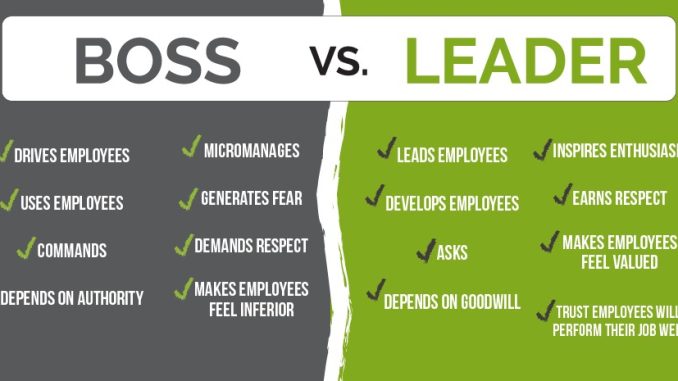
In the world of business, the terms “boss” and “leader” are often used interchangeably. On the surface, they may seem to describe the same role—someone in charge, someone who gives direction—but in practice, they represent two very different approaches to managing people. The distinction between a boss and a leader can significantly impact team morale, productivity, and the overall success of an organization. Understanding this difference isn’t just useful for those at the top—it’s essential for anyone aspiring to foster a healthy and effective work culture.
At its core, a boss is someone who holds a position of authority. They have the formal title, the decision-making power, and the responsibility of ensuring that tasks get done. A boss is typically focused on outcomes—meeting deadlines, hitting targets, and maintaining control over operations. Their authority is derived from their position in the organizational hierarchy, and they often operate from a command-and-control framework. In many traditional workplaces, the boss is seen as the figure you report to, the person who evaluates your performance, and the one who determines the next steps for the team.
A leader, on the other hand, may or may not hold a formal title. What sets a leader apart is not their position, but their influence. Leaders inspire rather than instruct. They earn respect through actions, not demands. While a boss may rely on rules and hierarchy to guide behavior, a leader focuses on vision, collaboration, and growth. Leadership is rooted in connection—understanding the people you work with, building trust, and guiding them toward shared goals.
The difference is perhaps most noticeable in how each handles authority. A boss may say, “Do this because I said so.” It’s an approach that emphasizes compliance and obedience, often leaving little room for dialogue or creative input. A leader, however, is more likely to say, “Here’s why this matters, and here’s how we can approach it together.” This subtle shift in tone transforms the dynamic from one of control to one of partnership. When people feel like they’re part of something meaningful, they’re more motivated to contribute with energy and purpose.
Another important distinction lies in how bosses and leaders treat mistakes. A boss might see a mistake as a failure that needs to be corrected quickly, sometimes placing blame or creating an atmosphere of fear. A leader views mistakes as opportunities for learning and growth. They create a culture where it’s safe to take calculated risks, where employees feel empowered to innovate without worrying about punishment for every misstep. This doesn’t mean they ignore errors, but rather that they approach them with a mindset of improvement instead of retribution.
Consider the difference in communication style. Bosses often issue directives and expect them to be followed. Their communication tends to be one-way, from the top down. Leaders, by contrast, value open communication. They listen as much as they speak. They encourage feedback, ask thoughtful questions, and foster dialogue. This type of communication builds stronger relationships, allowing for better collaboration and more honest conversations about what’s working and what isn’t.
Motivation is another area where the contrast becomes clear. A boss might rely on external motivators like bonuses, penalties, or pressure. While these tools can work in the short term, they rarely inspire lasting commitment. Leaders tap into intrinsic motivation. They help people see how their work aligns with their personal goals and values. They celebrate progress, recognize effort, and show genuine appreciation. In doing so, they cultivate a deeper sense of purpose within the team.
Leadership also involves a willingness to share credit and take responsibility. A boss might be quick to claim success and just as quick to deflect blame. A leader does the opposite—they highlight the team’s efforts when things go well and take ownership when things fall short. This accountability builds credibility, and credibility is the cornerstone of trust. Without trust, even the most skilled or intelligent person will struggle to lead effectively.
It’s worth noting that being a boss doesn’t preclude someone from being a leader. Many effective managers manage to blend authority with empathy, structure with flexibility. The best leaders recognize that titles don’t automatically earn loyalty—behavior does. They invest in people, not just processes. They build teams, not just task lists. And they understand that true influence comes not from enforcing rules, but from modeling the values and behaviors they hope to see in others.
Real-world examples can illustrate this contrast clearly. Imagine a sales manager who demands weekly reports, sets high targets, and reprimands employees who fall short without understanding the challenges behind the numbers. That’s a boss. Now picture a sales manager who reviews the same metrics, but also checks in with team members individually, offers support when numbers dip, and celebrates small wins along the way. That’s a leader. Both are trying to drive performance, but only one is building a culture that people want to be part of.
In today’s dynamic, people-driven workplaces, leadership is more important than ever. Employees crave meaning, connection, and growth. They don’t just want to be told what to do—they want to be heard, valued, and inspired. Organizations that recognize and cultivate leadership, at all levels, are better equipped to adapt, innovate, and thrive.
In the end, the difference between a boss and a leader comes down to influence versus authority, inspiration versus instruction, and collaboration versus command. While a boss may drive results through structure and discipline, a leader achieves them by unlocking the potential of others. And that difference, though sometimes subtle, can be the defining factor in a company’s culture, performance, and long-term success.