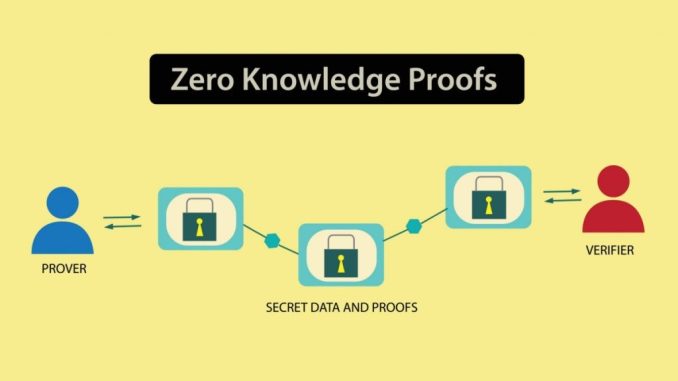
Zero-knowledge proofs have emerged as one of the most promising innovations in the blockchain space, offering a way to enhance privacy, security, and efficiency without compromising transparency. At their core, zero-knowledge proofs allow one party to prove to another that a statement is true without revealing any additional information beyond the validity of the claim. This seemingly paradoxical capability has profound implications for blockchain systems, which are built on the principles of trustless verification and decentralized consensus.
One of the most compelling benefits of zero-knowledge proofs in blockchain is the ability to preserve privacy while maintaining trust. Traditional blockchain transactions are transparent, meaning that anyone can view the details of a transfer, including amounts and addresses. While this transparency ensures accountability, it also raises concerns about confidentiality, particularly for businesses that handle sensitive financial data. Zero-knowledge proofs solve this dilemma by enabling verification of transactions without exposing the underlying details. This allows organizations to protect proprietary information while still benefiting from the trust and immutability of blockchain technology.
Security is another area where zero-knowledge proofs provide significant advantages. In blockchain systems, validation typically requires revealing certain data to the network, which can create vulnerabilities. With zero-knowledge proofs, validation can occur without disclosing sensitive information, reducing the risk of data leakage or exploitation. This is particularly important in industries such as healthcare or finance, where compliance with strict data protection regulations is essential. By integrating zero-knowledge proofs, blockchain platforms can meet regulatory requirements while maintaining the integrity of their systems.
Efficiency is also enhanced through the use of zero-knowledge proofs. Blockchains often struggle with scalability, as every transaction must be verified and recorded by multiple nodes. Zero-knowledge proofs streamline this process by allowing complex computations to be verified quickly and succinctly. Instead of requiring every participant to process the full details of a transaction, the proof itself serves as evidence of validity. This reduces computational overhead and improves throughput, making blockchain systems more practical for large-scale applications.
The benefits extend to interoperability as well. As blockchain ecosystems grow, the ability to interact across different platforms becomes increasingly important. Zero-knowledge proofs can facilitate secure cross-chain communication by enabling verification of data or transactions without requiring full disclosure. This opens the door to more seamless integration between networks, allowing businesses to leverage multiple blockchain solutions without sacrificing security or privacy. In a world where collaboration across ecosystems is becoming the norm, this capability is invaluable.
Zero-knowledge proofs also empower new business models and applications that were previously impractical. For instance, they enable confidential smart contracts, where the logic and outcomes of agreements can be verified without revealing sensitive terms. This allows companies to automate complex processes while keeping proprietary information secure. Similarly, decentralized identity solutions can use zero-knowledge proofs to confirm attributes such as age or citizenship without exposing personal details. These applications highlight how the technology can expand the scope of blockchain beyond financial transactions into broader areas of trust and verification.
From a user perspective, zero-knowledge proofs enhance confidence in blockchain systems. Individuals are often hesitant to engage with platforms that require them to expose personal or financial information. By ensuring that verification can occur without disclosure, zero-knowledge proofs reduce barriers to adoption and encourage broader participation. This is particularly relevant in consumer-facing industries, where trust and ease of use are critical to success. As blockchain becomes more integrated into everyday life, user-friendly privacy solutions will be essential.
The technology also supports compliance in an increasingly regulated environment. Governments and regulators are paying close attention to blockchain, particularly in areas such as financial services and data protection. Zero-knowledge proofs provide a way to meet regulatory demands without undermining the decentralized nature of blockchain. For example, they can enable selective disclosure, where only the necessary information is revealed to regulators while the rest remains private. This balance between transparency and confidentiality ensures that blockchain systems can operate within legal frameworks while preserving their core principles.
Another important benefit is the reduction of trust dependencies. In traditional systems, parties often rely on intermediaries to verify information, which introduces costs and risks. Zero-knowledge proofs eliminate the need for intermediaries by enabling direct verification between parties. This not only reduces costs but also strengthens the trustless nature of blockchain, where participants can interact securely without relying on centralized authorities. The ability to verify without trust is one of the defining features of blockchain, and zero-knowledge proofs take this principle to the next level.
The potential for innovation in financial services is particularly noteworthy. Zero-knowledge proofs can enable private transactions, confidential audits, and secure lending processes, all within a decentralized framework. Financial institutions can leverage these capabilities to offer new products that combine the transparency of blockchain with the confidentiality required by clients. This creates opportunities for growth and differentiation in a competitive industry, while also addressing longstanding concerns about privacy and security.
As blockchain adoption continues to expand, scalability remains a pressing challenge. Zero-knowledge proofs contribute to solving this issue by reducing the amount of data that needs to be processed and stored. By compressing complex computations into succinct proofs, they allow blockchains to handle more transactions without sacrificing performance. This scalability is critical for mainstream adoption, as businesses and consumers expect systems that can operate efficiently at scale.
The journey toward widespread implementation of zero-knowledge proofs is still ongoing, with researchers and developers working to refine the technology and make it more accessible. However, the progress to date demonstrates that the benefits are not merely theoretical. Real-world applications are already emerging, from privacy-focused cryptocurrencies to enterprise blockchain solutions. As the technology matures, its role in shaping the future of blockchain will only grow stronger.
Ultimately, zero-knowledge proofs represent a powerful tool for addressing some of the most pressing challenges in blockchain. They provide a way to balance privacy with transparency, security with accessibility, and efficiency with scalability. For businesses, regulators, and individuals alike, the benefits are clear: greater trust, stronger protection, and more opportunities for innovation. As blockchain continues to evolve, zero-knowledge proofs will play a central role in ensuring that the technology fulfills its promise of transforming how we exchange, verify, and protect information in the digital age.