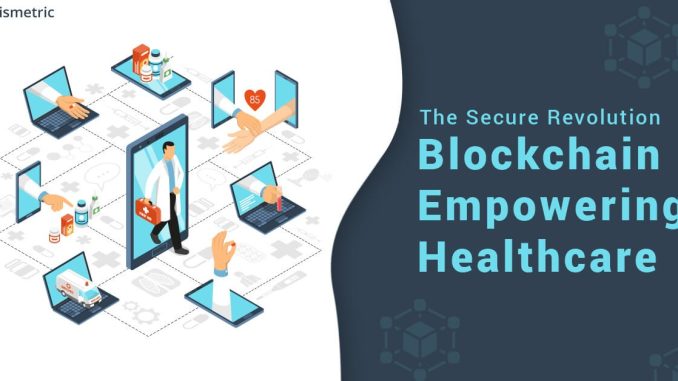
The healthcare industry, a colossal and complex ecosystem, faces persistent challenges ranging from fragmented patient data and rampant fraud to opaque supply chains and spiraling administrative costs. For decades, the aspiration for a more efficient, secure, and patient-centric healthcare system has been hampered by technological limitations and systemic inertia. However, a revolutionary technology, born from the digital currency realm, is emerging as a powerful catalyst for transformation: blockchain. This decentralized, immutable ledger system, renowned for its transparency and security, holds immense promise to fundamentally reshape how healthcare operates, benefiting patients, providers, and payers alike.
One of the most critical and often discussed applications of blockchain in healthcare is the **management of electronic health records (EHRs)**. The current state of EHRs is notoriously siloed; patient data is often scattered across multiple providers, hospitals, and specialty clinics, leading to a fragmented view of a patient’s medical history. This lack of interoperability can result in delayed diagnoses, redundant tests, medication errors, and a frustrating patient experience. Blockchain offers a solution by creating a secure, shared, and distributed ledger where all authorized healthcare entities can record and access patient data. Each new medical event – a doctor’s visit, a lab result, a prescription filled – can be added as a new “block” to the patient’s record, creating an immutable, chronological chain of information.
The beauty of this system lies in its ability to **enhance data security and patient privacy**. Unlike centralized databases, which are vulnerable to single points of failure and massive cyberattacks, a blockchain’s decentralized nature means data is distributed across a network of computers. This makes it incredibly difficult for malicious actors to tamper with or breach records, as any alteration would require changing every copy of the ledger simultaneously, a near-impossible feat due to cryptographic hashing. Furthermore, blockchain empowers patients with greater control over their own health data. Through cryptographic keys, patients can grant or revoke access to their medical records for specific providers or researchers, fostering a patient-centric model where individuals are active participants in managing their own health information, rather than passive recipients of care.
Beyond individual patient records, blockchain has the potential to revolutionize the **pharmaceutical supply chain**. The global supply chain for drugs and medical devices is complex and susceptible to counterfeiting, diversion, and inefficiencies. Counterfeit drugs pose a severe public health risk, and their traceability is a significant challenge for regulators and consumers alike. By implementing blockchain, every stage of a drug’s journey – from raw material sourcing and manufacturing to distribution and dispensation – can be recorded on an immutable ledger. This creates an end-to-end audit trail, allowing all authorized stakeholders, including manufacturers, distributors, pharmacists, and even patients, to verify a product’s authenticity, origin, and handling conditions in real-time. Such transparency not only combats the menace of counterfeit medications but also streamlines recalls and enhances overall supply chain efficiency, ensuring that safe and legitimate products reach patients.
The financial and administrative burdens on the healthcare system are staggering, with a significant portion of costs attributed to inefficient processes, fraud, and disputes. Blockchain, through the use of **smart contracts**, can drastically improve **claims processing and payment systems**. Smart contracts are self-executing contracts with the terms of the agreement directly written into code on the blockchain. For instance, once predefined conditions for an insurance claim are met and verified (e.g., a patient receiving a specific treatment from an in-network provider), the smart contract can automatically trigger payment, reducing manual verification, paperwork, and the need for intermediaries. This automation can lead to faster settlements, reduced administrative overhead, and significantly mitigate healthcare fraud, which costs billions annually.
Furthermore, blockchain can enhance **clinical trials and medical research**. The integrity and transparency of clinical trial data are paramount for developing new treatments and ensuring patient safety. Blockchain can securely record and timestamp every piece of data generated during a trial, from participant consent and drug administration to lab results and adverse events. This immutability ensures data integrity, prevents manipulation, and creates an auditable trail that can be verified by regulators and researchers, accelerating the drug development process and fostering greater trust in research outcomes. It can also facilitate secure data sharing among researchers while preserving patient anonymity, paving the way for more collaborative and efficient scientific discovery.
Despite these transformative possibilities, the adoption of blockchain in healthcare is not without its challenges. **Scalability** remains a technical hurdle, as the immense volume of healthcare data requires robust infrastructure capable of handling massive transactions without compromising speed. **Interoperability** with existing legacy systems is another significant concern; integrating blockchain solutions into a fragmented and entrenched technological landscape requires significant investment and careful planning. Moreover, **regulatory compliance**, particularly regarding data privacy laws like GDPR in Europe or HIPAA in the United States, must be meticulously addressed to ensure that the immutable nature of blockchain aligns with requirements for data erasure and patient rights. Overcoming these obstacles will require collaborative efforts between technology developers, healthcare providers, regulators, and policymakers.
In conclusion, blockchain technology is not a panacea for all of healthcare’s complex issues, but it represents a powerful and disruptive force with the potential to address some of its most fundamental challenges. By offering unparalleled security, transparency, and decentralization, blockchain can usher in an era of patient-empowered data management, verifiable pharmaceutical supply chains, streamlined administrative processes, and more trustworthy research. As pilot programs demonstrate tangible benefits and the technology matures, the distributed ledger stands ready to transform healthcare into a more efficient, equitable, and ultimately healthier future for everyone.