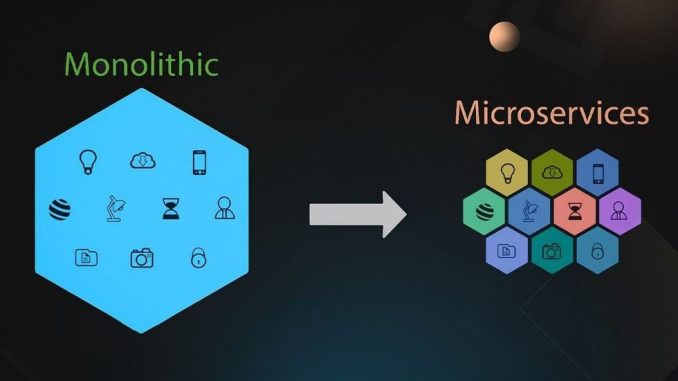
For decades, legacy architecture has been the backbone of enterprise systems, powering critical applications and supporting business operations. These monolithic structures were built to be reliable and stable, often designed in an era when scalability and agility were secondary concerns. While they served their purpose well, the demands of today’s digital economy have exposed their limitations. Businesses now require systems that can adapt quickly, integrate seamlessly, and scale efficiently, leading to a growing shift toward modern microservices.
Legacy architectures are typically characterized by large, tightly coupled applications where all components are interconnected. Any change to one part of the system often requires adjustments across the entire application, making updates slow and costly. This rigidity can hinder innovation, as teams are forced to navigate complex dependencies and lengthy release cycles. In a world where customer expectations evolve rapidly and competition is fierce, such constraints can become a significant disadvantage.
Microservices, by contrast, represent a fundamentally different approach. Instead of building one massive application, systems are broken down into smaller, independent services that communicate through well-defined interfaces. Each service is responsible for a specific function and can be developed, deployed, and scaled independently. This modularity introduces flexibility, allowing organizations to innovate faster and respond more effectively to changing market conditions. It also reduces risk, since issues in one service are less likely to disrupt the entire system.
The transition from legacy architecture to microservices is not simply a technical upgrade; it is a strategic transformation. Businesses must rethink how they design, build, and manage applications. This often involves adopting new development practices such as continuous integration and continuous delivery, which support rapid iteration and deployment. It also requires cultural shifts, encouraging collaboration across teams and empowering developers to take ownership of individual services. The move to microservices is as much about organizational agility as it is about technology.
One of the most compelling advantages of microservices is scalability. In legacy systems, scaling often means replicating the entire application, which is resource-intensive and inefficient. With microservices, organizations can scale only the components that require additional capacity. For instance, if a payment service experiences heavy demand, it can be scaled independently without affecting other parts of the system. This targeted scalability optimizes resource usage and reduces costs, making it easier to handle fluctuations in demand.
Resilience is another key benefit. Legacy architectures are vulnerable to cascading failures, where a single issue can bring down the entire system. Microservices mitigate this risk by isolating problems within individual services. If one service fails, others can continue to operate, ensuring that the overall system remains functional. This resilience is critical for businesses that rely on uninterrupted service delivery, particularly in industries such as finance, healthcare, and e-commerce.
The journey to microservices, however, is not without challenges. Migrating from legacy systems requires careful planning and execution. Organizations must decide whether to rebuild applications from scratch, gradually refactor existing systems, or adopt a hybrid approach. Each path has its trade-offs, and success depends on aligning the migration strategy with business priorities. Additionally, microservices introduce complexity in areas such as monitoring, security, and data management, requiring robust frameworks and tools to ensure smooth operation.
Despite these challenges, the long-term benefits of microservices often outweigh the difficulties of transition. Businesses that embrace this architecture gain the ability to innovate continuously, experiment with new ideas, and deliver value to customers more quickly. They also position themselves to integrate emerging technologies such as artificial intelligence, machine learning, and edge computing, which thrive in modular, flexible environments. Microservices create a foundation for future growth, enabling organizations to stay competitive in an ever-changing landscape.
The shift also has implications for talent and skills. Developers working in microservices environments must be comfortable with distributed systems, containerization, and orchestration platforms like Kubernetes. They must also embrace DevOps practices, collaborating closely with operations teams to ensure seamless deployment and monitoring. Investing in training and fostering a culture of continuous learning are essential for building the capabilities needed to succeed in this new paradigm.
From a business perspective, the move to microservices supports strategic goals such as faster time-to-market, improved customer experience, and greater operational efficiency. By breaking down silos and enabling teams to work independently, organizations can deliver updates and new features more frequently. Customers benefit from more responsive services, while businesses gain the agility to pivot quickly in response to market shifts. This alignment between technology and business outcomes underscores the strategic value of microservices.
Ultimately, the journey from legacy architecture to modern microservices is about embracing change. It requires organizations to let go of outdated systems that no longer serve their needs and invest in architectures that support agility, scalability, and resilience. While the transition may be complex, the rewards are significant: faster innovation, stronger customer relationships, and a more competitive position in the digital economy. For businesses seeking to thrive in the future, microservices are not just an option—they are becoming a necessity.
As technology continues to evolve, the gap between legacy systems and modern architectures will only widen. Organizations that act now to modernize their systems will be better prepared to harness new opportunities and navigate future challenges. The move to microservices is not the end of the journey but the beginning of a new era in software development, one defined by flexibility, speed, and resilience. Those who embrace it will find themselves well-positioned to lead in a world where adaptability is the ultimate competitive advantage.