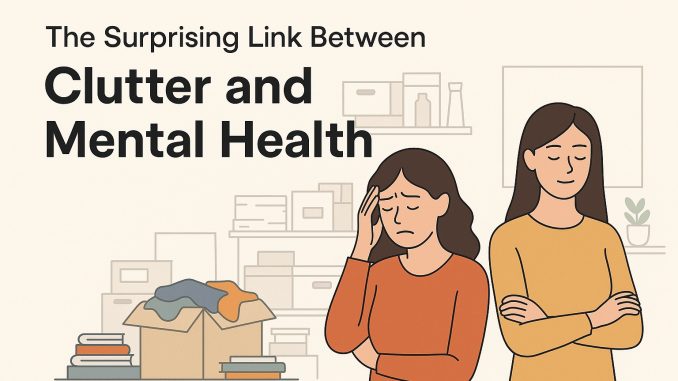
Clutter may seem like nothing more than a minor inconvenience, the inevitable byproduct of a busy life. Yet mounting research shows that clutter can do far more than create visual chaos—it can trigger measurable changes in stress hormones, particularly cortisol, which directly affects mental clarity, energy, and overall well-being. For professionals navigating high-stakes decisions and long hours, the presence of clutter in their environment is not just an aesthetic issue but a factor that can quietly undermine performance. Understanding the link between physical disorder and physiological stress provides a compelling reason to rethink how we manage our workspaces and living environments.
The human brain is designed to seek order. When surrounded by clutter, it is forced to process excess stimuli, even unconsciously. Each misplaced file, unwashed dish, or overstuffed inbox competes for attention, consuming mental bandwidth that could otherwise be directed toward important tasks. This creates a form of cognitive overload that elevates stress hormones. For example, a desk stacked with unfinished projects sends repeated signals of incompletion, which subtly pressure the brain and keep it in a state of alertness. Much like an open tab in a computer drains resources even when not in use, clutter operates as a constant drain on mental energy.
The relationship between clutter and cortisol becomes particularly significant in high-pressure professional contexts. Cortisol is the body’s primary stress hormone, designed to help us respond quickly to immediate threats. While it is useful in short bursts, chronic elevation can impair memory, decision-making, and even immune function. An environment full of clutter can act as a low-grade stressor, keeping cortisol levels consistently higher than they should be. The impact may feel subtle at first—a vague sense of unease, irritability, or difficulty concentrating—but over time, it compounds, leading to fatigue and reduced resilience. For business leaders who rely on sharp thinking and composure, these effects can have real consequences for performance and leadership presence.
Clutter also has an emotional dimension that contributes to stress. Spaces filled with unfinished tasks and disorganization often evoke guilt, frustration, or a sense of being out of control. Consider the experience of arriving at an office where papers spill off the desk and digital notifications are stacked into the hundreds. The immediate impression is one of chaos, even if the tasks themselves are manageable. This emotional response further triggers stress hormones, creating a feedback loop in which clutter intensifies stress, and stress makes it harder to tackle clutter effectively. The cycle resembles a business project spiraling out of scope: the more it is ignored, the more overwhelming it becomes.
It is important to note that clutter does not affect everyone in exactly the same way. Some individuals thrive in what appears to be organized chaos, claiming they know exactly where everything is. However, even in these cases, the brain is still working harder to filter through visual and cognitive noise. The difference lies in perception; when clutter crosses the line from functional mess to disruptive chaos, stress hormones rise sharply. Much like differing leadership styles, some professionals tolerate a degree of disorder, but sustained excess almost always erodes efficiency and calm.
The workplace is a particularly relevant arena for examining the link between clutter and stress hormones. In an era where hybrid work blurs the boundaries between home and office, clutter often multiplies, spilling into multiple environments. A cluttered desk in the office might mirror a cluttered kitchen counter at home, creating a sense of stress that lingers across both spaces. Professionals may notice that they feel more drained in such environments, even if they cannot pinpoint why. By contrast, organized, uncluttered spaces provide a subtle sense of control and calm, helping to regulate stress responses and foster a more focused state of mind. This effect is not unlike how a well-structured business strategy reduces anxiety by making priorities clear.
Decluttering does not mean striving for perfection or adopting minimalist extremes. Rather, it is about creating an environment that supports mental clarity and reduces unnecessary stimuli. In practical terms, this could be as simple as clearing a desk at the end of the workday, organizing digital files, or designating spaces for frequently used items. These small acts can significantly lower cortisol levels by signaling completion and order. Just as businesses use systems and processes to minimize inefficiencies, individuals can design their physical environments to minimize stress triggers. The result is not only a cleaner space but a calmer, more focused state of mind.
The broader implication of understanding this link is that clutter management becomes a health strategy, not just a matter of personal preference. By recognizing that physical disorder has measurable effects on stress hormones, professionals can reframe organization as an investment in performance and resilience. Much like adopting healthier eating or regular exercise, maintaining a tidy space is a preventive measure that supports long-term well-being. It allows individuals to approach challenges with a clearer mind and greater emotional balance, qualities that are invaluable in both professional and personal spheres.
Ultimately, the connection between clutter and stress hormones highlights the powerful interplay between environment and physiology. Clutter is not just visual noise—it is a source of cognitive and hormonal disruption that influences how we think, feel, and perform. For professionals seeking to maximize their energy and maintain composure under pressure, paying attention to physical surroundings is as important as managing schedules or setting goals. By reducing clutter and creating order, individuals can lower cortisol levels, reclaim mental bandwidth, and foster an environment that supports focus, creativity, and calm. In this way, decluttering is not simply an act of tidying up but a strategic choice to enhance both health and performance.
Would you like me to also prepare a condensed 400–500 word version of this article that could be shared in a workplace wellness newsletter or as a short LinkedIn post?