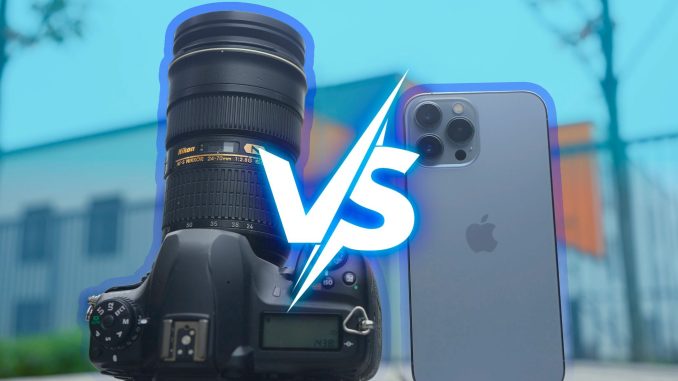
In the ever-evolving landscape of digital imaging, the debate between smartphone cameras and traditional Digital Single-Lens Reflex (DSLR) cameras has intensified, particularly as we navigate the technological advancements of 2025. For years, DSLRs reigned supreme, offering unparalleled image quality, precise control, and the versatility of interchangeable lenses. However, smartphone cameras, leveraging the power of computational photography and shrinking component sizes, have made astonishing strides, closing the gap in ways few could have predicted. The question now isn’t just about which device takes “better” pictures, but rather, which tool is best suited for different photographic needs in an era defined by instant sharing and sophisticated AI.
At the core of the traditional camera’s enduring advantage is its larger sensor size. A DSLR, and its increasingly dominant mirrorless counterpart, typically houses a sensor significantly larger than anything found in a smartphone, often several times over. This physical difference allows professional cameras to gather more light, leading to superior low-light performance, less image noise, and a greater dynamic range—the ability to capture detail in both the brightest highlights and darkest shadows of a scene. Furthermore, larger sensors, combined with dedicated optics, inherently produce a more natural and pleasing depth of field, often referred to as ‘bokeh,’ where the subject is sharp and the background is beautifully blurred. This optical quality is still incredibly difficult for even the most advanced smartphone cameras to replicate authentically, despite their impressive computational efforts. For a professional portrait photographer or a landscape enthusiast aiming for vast, detailed prints, the inherent advantages of a larger sensor remain compelling.
However, the smartphone camera’s revolution is firmly rooted in computational photography. This isn’t just about better hardware; it’s about the software smarts that process images in real-time. Modern smartphones, powered by sophisticated AI algorithms, capture multiple frames in quick succession, analyze them, and then intelligently combine them to create a single, optimized image. Features like Night Mode, which can transform dimly lit scenes into surprisingly bright and detailed photos, and Portrait Mode, which simulates bokeh by algorithmically separating the subject from the background, are prime examples of this computational prowess. As of 2025, AI is even more deeply integrated, with cameras now able to “understand” what they’re looking at, adjusting settings and enhancing images dynamically. Samsung’s latest Galaxy devices, for instance, are pushing the boundaries of multimodal AI, allowing cameras to turn what users see into understanding and action, offering more intuitive and impactful photography.
The sheer convenience and ubiquity of smartphone cameras are also undeniable factors in their dominance for everyday photography. The best camera, as the adage goes, is the one you have with you. A smartphone is always in our pockets, ready to capture spontaneous moments, document daily life, or instantly share experiences on social media. Its integrated connectivity, intuitive touch interface, and vast ecosystem of editing apps make the entire workflow from capture to sharing remarkably seamless. For instance, being able to snap a vibrant street food scene in a bustling market like Chatuchak in Bangkok and instantly share it with friends across the globe, all from a single device, is a powerful user experience that traditional cameras simply cannot match without additional steps and gear.
Furthermore, the modularity trend in smartphone cameras is an intriguing development for 2025. Companies like Xiaomi and Realme have showcased concepts with interchangeable or modular lenses that can snap onto the smartphone, attempting to bridge the gap in optical versatility. While still conceptual, these innovations hint at a future where the smartphone body acts as a powerful computational core, paired with optimized, professional-grade optics that can be swapped out as needed. This could provide users with a level of creative control traditionally reserved for DSLRs, without the bulk of a full camera system.
Despite these advancements, DSLRs (and more accurately, their mirrorless successors, which have largely eclipsed DSLRs in new sales and innovation) still hold significant ground in several key areas. The sheer variety and quality of interchangeable lenses available for dedicated cameras offer unparalleled creative flexibility, from ultra-wide angles to extreme telephotos and specialized macro lenses. Manual controls on dedicated cameras provide photographers with a level of granular control over exposure, focus, and other settings that smartphones, even with their Pro modes, cannot fully replicate. Ergonomics also play a role; the physical grip, dedicated buttons, and robust build of DSLRs are designed for comfort and control during extended shooting sessions, especially in challenging environments.
In conclusion, the 2025 landscape for photography is less about a clear winner and more about a divergence of purpose. Smartphone cameras, fueled by relentless computational innovation and AI, have become incredibly capable for the vast majority of photographic needs, offering convenience, impressive image quality in diverse conditions, and seamless sharing. They are the go-to for casual users, social media enthusiasts, and even many content creators who prioritize speed and connectivity. However, for professional photographers, serious hobbyists, or those demanding the ultimate in image quality, optical precision, low-light performance, and creative control, dedicated cameras—particularly advanced mirrorless systems—continue to hold a distinct advantage. The future likely lies not in one replacing the other, but in a continued evolution where each category refines its strengths, providing photographers with powerful tools tailored to their specific needs and creative ambitions.