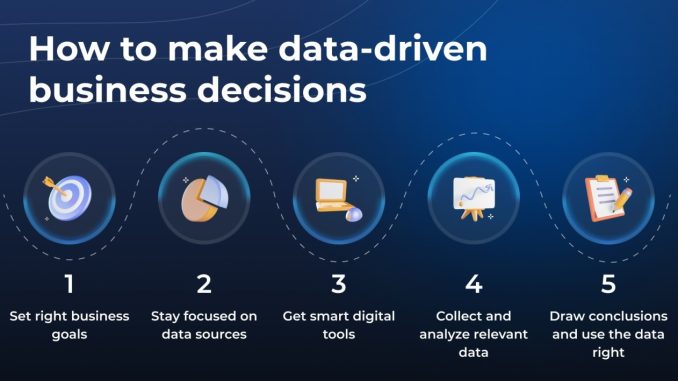
In today’s hyper-competitive and rapidly evolving business landscape, intuition, experience, and gut feelings, while valuable, are no longer sufficient to consistently navigate complex strategic choices. The sheer volume and velocity of information available have ushered in an era where **data has become the most valuable currency**, and the ability to effectively leverage it to inform and drive business decisions is a non-negotiable imperative for sustainable success. This shift from guesswork to data-driven insights empowers organizations to identify opportunities, mitigate risks, optimize operations, and ultimately make more informed choices that directly impact profitability and growth.
At its core, using data to drive business decisions involves collecting, processing, analyzing, and interpreting vast amounts of information to uncover patterns, trends, and actionable intelligence. It’s about moving beyond simply recording what happened to understanding *why* it happened and *what is likely to happen next*. This strategic approach requires not just sophisticated tools but a fundamental cultural shift within an organization, prioritizing curiosity, critical thinking, and a willingness to question assumptions based on empirical evidence.
One of the most immediate and impactful ways data informs business decisions is in **understanding customer behavior and enhancing the customer experience**. By analyzing transactional data, website analytics, social media interactions, and customer feedback, businesses can gain granular insights into purchasing patterns, product preferences, Browse habits, and pain points. For instance, an e-commerce retailer in Germany might analyze sales data to discover that customers in Bavaria prefer a different product line than those in Berlin, allowing for hyper-targeted marketing campaigns and localized inventory management. This data empowers businesses to personalize product recommendations, optimize pricing strategies, refine marketing messages, and streamline the customer journey, leading to increased satisfaction, higher conversion rates, and greater customer lifetime value.
Beyond customer insights, data is revolutionizing **operational efficiency and resource optimization**. Manufacturing firms use data from sensors on machinery to predict maintenance needs before breakdowns occur, minimizing costly downtime. Logistics companies analyze traffic patterns, delivery routes, and weather forecasts to optimize their supply chains, reducing fuel consumption and speeding up delivery times. Human resources departments leverage data to identify trends in employee turnover, assess the effectiveness of training programs, and even predict potential talent gaps. This data-driven approach to operations allows businesses to identify inefficiencies, allocate resources more effectively, and proactively address bottlenecks, leading to significant cost savings and improved productivity across the entire organization.
Furthermore, data plays a critical role in **strategic decision-making and risk mitigation**. When contemplating expansion into new markets, launching a new product line, or making a significant investment, historical data combined with predictive analytics can provide invaluable foresight. By analyzing market trends, competitive landscapes, economic indicators, and consumer demographics, businesses can assess the potential success and associated risks of various strategic initiatives. For example, a financial services firm considering offering a new investment product could analyze market volatility data, investor sentiment, and demographic trends to gauge its potential uptake and identify unforeseen risks. This allows leaders to make choices based on evidence and probability, rather than solely on conjecture, leading to more robust and resilient business strategies.
However, effectively leveraging data to drive decisions is not without its challenges. The sheer **volume and complexity of data** can be overwhelming, necessitating robust data infrastructure, skilled data scientists, and advanced analytical tools. Ensuring data quality, consistency, and accuracy is paramount; “garbage in, garbage out” remains a golden rule. Moreover, businesses must navigate the critical concerns of **data privacy and ethical usage**, particularly with stringent regulations like GDPR. Building trust with customers means being transparent about data collection practices and ensuring data is used responsibly and securely.
The transition to a truly data-driven culture also requires a **commitment to data literacy across all levels of an organization**. It’s not enough for only data scientists to understand the insights; managers and frontline employees also need to be able to interpret data dashboards, ask critical questions, and integrate data-driven insights into their daily workflows. This necessitates ongoing training and a leadership team that champions data-driven decision-making, moving away from subjective opinions to objective evidence.
In conclusion, the era of making critical business decisions based solely on intuition is rapidly receding. Data has emerged as an indispensable asset, empowering businesses to understand their customers more deeply, optimize their operations with greater precision, and craft strategic pathways with reduced risk. While challenges related to data volume, privacy, and organizational culture persist, the transformative power of data to inform, guide, and ultimately drive business success is undeniable. Companies that cultivate a robust data infrastructure, invest in analytical capabilities, and foster a data-literate culture will be the ones best positioned to innovate, adapt, and thrive in the ever-evolving global marketplace.