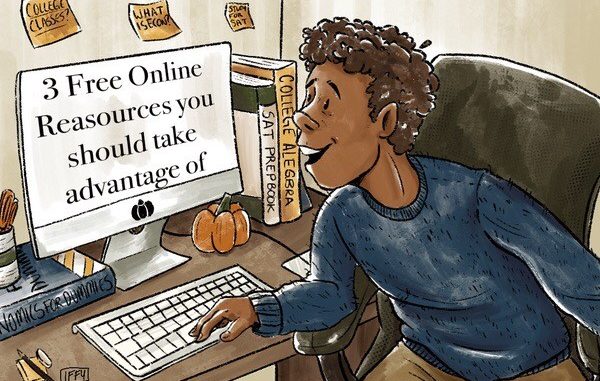
In a rapidly evolving global landscape, the pursuit of knowledge and skill acquisition is no longer a luxury but a fundamental necessity for personal growth and professional relevance. Historically, quality education often came with a prohibitive price tag, limiting access for many. However, the digital revolution has ushered in an unprecedented era of open access to learning, making a vast universe of free educational resources available to anyone with an internet connection. The challenge now is not a lack of resources, but rather how to effectively identify, navigate, and leverage this wealth of information to achieve tangible learning outcomes and career advancement.
The sheer volume of free educational content can be overwhelming, necessitating a strategic approach to avoid simply drifting through endless videos and articles without a clear purpose. The first and most crucial step is to **define your learning objectives with precision**. Before diving into a course or a series of tutorials, ask yourself: What specific skill do I want to acquire? What knowledge gap am I trying to fill? How will this learning contribute to my career goals, personal development, or an upcoming project? For instance, instead of vaguely deciding to “learn marketing,” narrow it down to “mastering SEO for small businesses” or “understanding the basics of social media advertising.” This clarity provides a powerful filter, allowing you to selectively choose resources that directly align with your needs and avoid the distraction of irrelevant content.
Once your objectives are clear, the next step involves **identifying reputable sources**. While the internet is a treasure trove of information, it also contains a considerable amount of inaccurate or low-quality content. Focus on platforms and institutions known for their academic rigor and industry expertise. Major universities like MIT, Harvard, and Stanford offer extensive OpenCourseWare (OCW) initiatives, providing access to lecture notes, syllabi, and even full course videos from their actual curricula. Platforms like Coursera and edX partner with leading universities and companies to offer free “audit” tracks for many of their courses, allowing you to access learning materials without the certificate fee. Khan Academy remains an excellent resource for foundational subjects from mathematics to economics. For career-specific skills, look to industry leaders like Google (Google Digital Garage, Google Career Certificates) or HubSpot (HubSpot Academy) which provide free, practical training. Checking reviews and ratings from other learners can also offer valuable insights into the quality and effectiveness of a course or resource.
Mere consumption of free content is insufficient; **active engagement is paramount** for effective learning. It’s easy to passively watch a video or skim an article, but true learning occurs when you interact with the material. As you go through free courses or tutorials, actively take notes, summarize key concepts in your own words, and pause to reflect on how the information connects to your existing knowledge. More importantly, seek out opportunities to apply what you’ve learned. If it’s a coding tutorial, try writing your own code. If it’s a course on project management, apply the principles to a personal project or a small task at work. Many platforms offer practice exercises, quizzes, or even small projects. Engaging with these hands-on components reinforces understanding and helps solidify the information in your long-term memory. The act of doing is the ultimate test of comprehension.
Furthermore, **creating a structured learning schedule** transforms sporadic engagement into a sustainable habit. While free resources offer unparalleled flexibility, this very freedom can sometimes lead to procrastination. Treat your free learning endeavors with the same discipline you would a paid course or a work commitment. Allocate specific, consistent time slots in your week for learning, even if it’s just 30 minutes a day. Use a calendar, set reminders, and stick to your schedule as much as possible. This consistent effort, even in small increments, leads to significant cumulative gains over time. Remember, the goal is not to cram information but to build a steady, incremental knowledge base.
Finally, **leverage the community aspects** often available with free educational resources. Many online platforms include discussion forums, peer review opportunities, or social media groups where learners can connect, ask questions, and share insights. Engaging with these communities can provide clarification on challenging concepts, offer different perspectives, and create a sense of accountability. Networking with like-minded individuals who are also exploring similar topics can open doors to collaboration, mentorship, and even career opportunities. Don’t underestimate the power of collective intelligence and mutual support in a self-directed learning journey.
In conclusion, the abundance of free educational resources represents a monumental opportunity for continuous personal and professional development. By adopting a strategic approach – clearly defining learning objectives, diligently seeking out reputable sources, actively engaging with the material, creating a structured learning routine, and leveraging community support – individuals can transcend the traditional barriers to education. This empowers them to acquire new skills, stay competitive in their fields, and foster a lifelong commitment to learning, all without incurring significant financial cost. The knowledge is out there, freely accessible; the true advantage lies in the disciplined and intelligent pursuit of it.