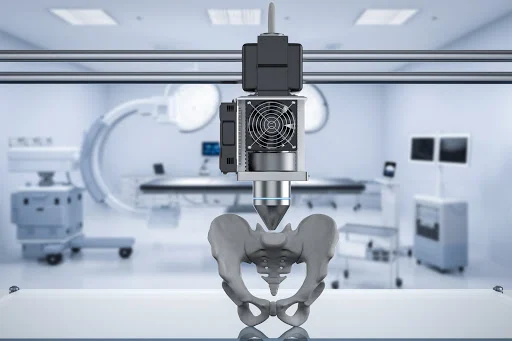
3D printing, also known as additive manufacturing, is revolutionizing the healthcare industry. From creating custom prosthetics to printing human tissues, this technology is opening up new possibilities for personalized medicine, surgical planning, and medical device manufacturing. As 3D printing continues to advance, its role in healthcare is expected to grow, transforming how we diagnose, treat, and manage medical conditions. This article explores the current applications of 3D printing in healthcare, its benefits, challenges, and the future potential of this groundbreaking technology.
What is 3D Printing?
3D printing is a process of creating three-dimensional objects by layering materials based on a digital model. In healthcare, this technology uses biocompatible materials, such as plastics, metals, and even living cells, to produce customized medical devices, implants, and tissues. The precision and flexibility of 3D printing make it an invaluable tool for addressing complex medical challenges.
Current Applications of 3D Printing in Healthcare
3D printing is already being used in various areas of healthcare, with remarkable results. Here are some of the most significant applications:
1. Custom Prosthetics and Orthotics
Traditional prosthetics and orthotics can be expensive and time-consuming to produce. 3D printing allows for the creation of custom-fitted prosthetics and orthotics at a fraction of the cost and time. These devices are tailored to the individual’s anatomy, improving comfort and functionality.
2. Surgical Planning and Training
3D printing enables surgeons to create accurate models of a patient’s anatomy, such as bones, organs, or tumors, based on imaging data like CT scans or MRIs. These models help surgeons plan complex procedures, practice techniques, and educate patients about their conditions.
3. Implants and Medical Devices
3D printing is used to produce customized implants, such as dental crowns, hip replacements, and spinal implants. These implants are designed to match the patient’s unique anatomy, reducing the risk of complications and improving outcomes.
4. Bioprinting
Bioprinting is an emerging field that uses 3D printing to create living tissues and organs. While still in its early stages, bioprinting has the potential to address the global shortage of donor organs and revolutionize regenerative medicine.
5. Drug Delivery Systems
3D printing is being used to create personalized drug delivery systems, such as pills with complex structures that release medication at specific rates. This technology allows for precise dosing and improved patient compliance.
6. Medical Tools and Equipment
3D printing enables the rapid production of medical tools and equipment, such as surgical instruments, splints, and even low-cost diagnostic devices. This is particularly valuable in resource-limited settings.
Benefits of 3D Printing in Healthcare
The adoption of 3D printing in healthcare offers numerous benefits:
1. Personalization
3D printing allows for the creation of customized solutions tailored to the individual’s unique anatomy and needs, improving outcomes and patient satisfaction.
2. Cost-Effectiveness
By reducing material waste and streamlining production processes, 3D printing can lower the cost of medical devices and treatments.
3. Speed
3D printing enables rapid prototyping and production, reducing the time required to create medical devices, implants, and surgical models.
4. Innovation
3D printing fosters innovation by enabling the development of complex designs and structures that were previously impossible to manufacture.
5. Accessibility
3D printing can make healthcare more accessible by producing low-cost medical devices and tools, particularly in underserved areas.
Challenges and Limitations
Despite its potential, 3D printing in healthcare faces several challenges:
1. Regulatory Hurdles
The regulatory framework for 3D-printed medical devices and tissues is still evolving. Ensuring safety and efficacy while promoting innovation is a delicate balance.
2. Material Limitations
While 3D printing materials have advanced significantly, there are still limitations in terms of biocompatibility, durability, and functionality.
3. High Initial Costs
The initial investment in 3D printing technology and expertise can be high, which may be a barrier for some healthcare providers.
4. Ethical Concerns
Bioprinting raises ethical questions about the creation and use of human tissues and organs, as well as the potential for unequal access to these technologies.
5. Technical Expertise
Implementing 3D printing in healthcare requires specialized knowledge and skills, which may not be readily available in all settings.
The Future of 3D Printing in Healthcare
As 3D printing technology continues to evolve, its role in healthcare is expected to expand. Here are some trends to watch:
1. Bioprinting of Organs
The ability to 3D print functional human organs could revolutionize transplantation and regenerative medicine, addressing the global shortage of donor organs.
2. Personalized Medicine
3D printing will enable the production of personalized medical devices, implants, and drug delivery systems, improving treatment outcomes and patient satisfaction.
3. On-Demand Manufacturing
Hospitals and clinics may adopt 3D printing to produce medical devices and tools on-site, reducing costs and lead times.
4. Advanced Materials
The development of new materials, such as biodegradable polymers and conductive inks, will expand the applications of 3D printing in healthcare.
5. Integration with AI and Robotics
The integration of 3D printing with artificial intelligence (AI) and robotics will enable more precise and efficient production processes, as well as innovative surgical techniques.
Real-World Examples of 3D Printing in Healthcare
Several organizations and initiatives are already leveraging 3D printing to improve healthcare:
1. Open Bionics
Open Bionics uses 3D printing to create affordable, customizable prosthetic limbs for amputees. Their designs are not only functional but also stylish, empowering users to express their individuality.
2. Stratasys
Stratasys provides 3D printing solutions for healthcare, including surgical models, medical devices, and dental applications. Their technology is used by hospitals and medical device manufacturers worldwide.
3. Organovo
Organovo is a pioneer in bioprinting, developing 3D-printed tissues for drug testing and regenerative medicine. Their work has the potential to reduce the need for animal testing and accelerate drug development.
4. 3D Systems
3D Systems offers a range of healthcare solutions, including patient-specific surgical guides, implants, and anatomical models. Their technology is used in fields like orthopedics, cardiology, and dentistry.
Conclusion
3D printing is poised to transform healthcare by enabling personalized, cost-effective, and innovative solutions for a wide range of medical challenges. From custom prosthetics to bioprinted organs, the potential applications of this technology are vast and exciting. While challenges remain, ongoing advancements in materials, regulation, and technology are paving the way for a future where 3D printing plays a central role in healthcare. By embracing this technology, we can improve patient outcomes, reduce costs, and push the boundaries of what is possible in medicine.