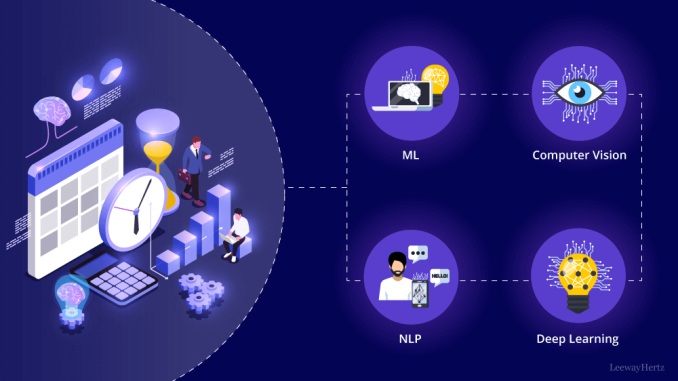
In today’s fast-paced and highly competitive business environment, supply chain management has become a critical factor in determining the success of an organization. Companies are constantly looking for ways to optimize their supply chains, reduce costs, and improve efficiency. Enter Artificial Intelligence (AI), a transformative technology that is revolutionizing the way supply chains are managed. From demand forecasting to inventory management, AI is enabling businesses to make smarter decisions, enhance transparency, and stay ahead of the competition.
What is Supply Chain Management?
Supply chain management (SCM) refers to the oversight of materials, information, and finances as they move from supplier to manufacturer to wholesaler to retailer to consumer. It involves coordinating and integrating these flows both within and among companies. Effective SCM ensures that products are delivered to the right place, at the right time, and at the lowest possible cost. However, managing a supply chain is no easy task, as it involves dealing with numerous variables, uncertainties, and complexities.
The Challenges of Traditional Supply Chain Management
Traditional supply chain management often relies on manual processes and historical data, which can lead to inefficiencies and errors. Some of the common challenges include:
- Demand Forecasting: Predicting future demand is inherently difficult, especially in volatile markets.
- Inventory Management: Maintaining the right level of inventory is a delicate balance. Too much inventory leads to high holding costs, while too little can result in stockouts and lost sales.
- Supplier Management: Managing relationships with multiple suppliers and ensuring timely delivery of materials can be challenging.
- Transportation and Logistics: Optimizing transportation routes and managing logistics costs are complex tasks that require real-time data and analysis.
How AI is Transforming Supply Chain Management
AI is addressing these challenges by providing advanced tools and techniques that enable businesses to make data-driven decisions. Here are some of the key ways AI is transforming supply chain management:
1. Demand Forecasting
AI-powered demand forecasting uses machine learning algorithms to analyze historical data, market trends, and external factors (such as weather and economic conditions) to predict future demand with greater accuracy. This allows businesses to optimize their inventory levels, reduce waste, and improve customer satisfaction.
2. Inventory Management
AI can automate inventory management by continuously monitoring stock levels and predicting when replenishment is needed. This helps businesses avoid overstocking and stockouts, leading to cost savings and improved efficiency.
3. Supplier Management
AI can analyze supplier performance data to identify the most reliable and cost-effective suppliers. It can also predict potential disruptions in the supply chain, allowing businesses to take proactive measures to mitigate risks.
4. Transportation and Logistics
AI can optimize transportation routes by analyzing real-time data on traffic, weather, and other factors. This reduces transportation costs and improves delivery times. Additionally, AI-powered logistics platforms can provide end-to-end visibility into the supply chain, enhancing transparency and accountability.
5. Predictive Maintenance
AI can predict when machinery and equipment are likely to fail, allowing businesses to perform maintenance before a breakdown occurs. This reduces downtime and maintenance costs, ensuring that the supply chain operates smoothly.
The Benefits of AI in Supply Chain Management
The integration of AI into supply chain management offers numerous benefits, including:
- Improved Efficiency: AI automates repetitive tasks and provides real-time insights, enabling businesses to operate more efficiently.
- Cost Savings: By optimizing inventory levels, transportation routes, and supplier relationships, AI helps businesses reduce costs.
- Enhanced Transparency: AI provides end-to-end visibility into the supply chain, making it easier to track products and identify bottlenecks.
- Better Decision-Making: AI-powered analytics provide actionable insights, enabling businesses to make informed decisions quickly.
- Increased Agility: AI allows businesses to respond to changes in demand and market conditions more effectively, increasing their agility and competitiveness.
Real-World Examples of AI in Supply Chain Management
Several companies are already leveraging AI to transform their supply chains. For example:
- Amazon: The e-commerce giant uses AI-powered robots in its warehouses to automate picking and packing processes, significantly improving efficiency.
- Walmart: Walmart uses AI to optimize its inventory management and demand forecasting, ensuring that products are always in stock.
- DHL: The logistics company uses AI to optimize its transportation routes and predict potential disruptions, improving delivery times and reducing costs.
Challenges and Considerations
While AI offers numerous benefits, there are also challenges and considerations that businesses must address:
- Data Quality: AI relies on high-quality data to provide accurate insights. Poor data quality can lead to incorrect predictions and decisions.
- Integration: Integrating AI into existing supply chain systems can be complex and require significant investment.
- Ethical Concerns: The use of AI in supply chain management raises ethical concerns, such as job displacement and data privacy.
- Skill Gaps: Implementing AI requires specialized skills and expertise, which may not be readily available in all organizations.
The Future of AI in Supply Chain Management
The future of AI in supply chain management is incredibly promising. As AI technology continues to advance, we can expect to see even more innovative applications and improvements in efficiency, transparency, and decision-making. Some of the emerging trends include:
- Autonomous Vehicles: The use of autonomous vehicles for transportation and delivery is expected to increase, reducing costs and improving efficiency.
- Blockchain Integration: Combining AI with blockchain technology can enhance transparency and security in the supply chain.
- AI-Driven Sustainability: AI can help businesses optimize their supply chains for sustainability, reducing their environmental impact.
Conclusion
AI is revolutionizing supply chain management by providing advanced tools and techniques that enable businesses to optimize their operations, reduce costs, and improve transparency. While there are challenges and considerations that must be addressed, the benefits of AI far outweigh the risks. As AI technology continues to evolve, businesses that embrace it will be better positioned to thrive in an increasingly competitive and complex global market.